
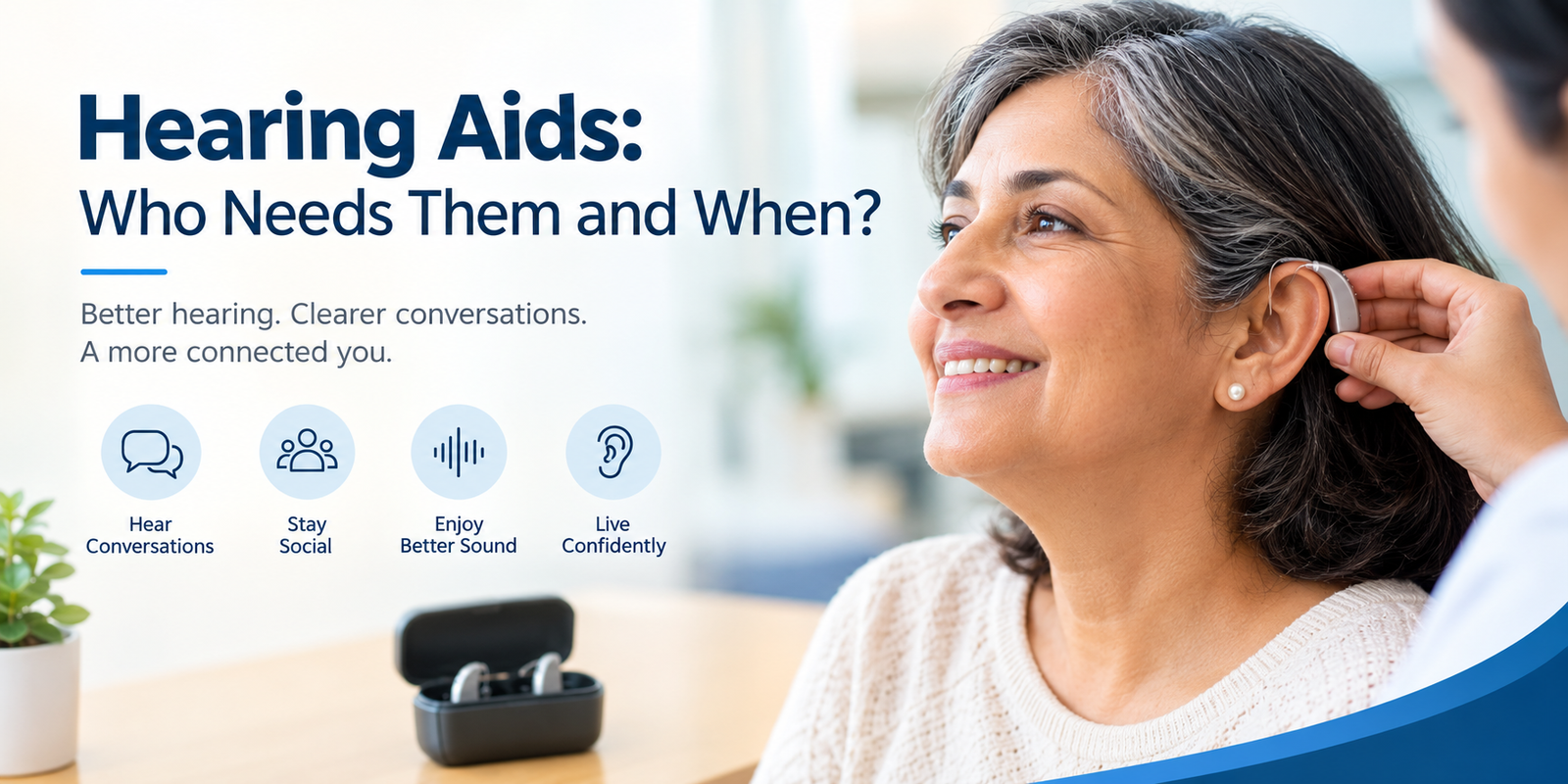
Not hearing every word in a conversation once in a while is usually not a reason to worry. But if you regularly ask people to repeat themselves, turn up the television, struggle to follow conversations in noisy places or find yourself avoiding certain situations because you cannot hear comfortably, it may be time to pay closer attention to your hearing.
This often leads to a simple question: Do I need hearing aids?
Not everyone who has difficulty hearing needs a hearing aid. The right answer depends on whether hearing loss is present, how much it affects your everyday communication and what a proper hearing assessment shows. Understanding these factors can help you decide when it makes sense to seek professional advice and what to expect if hearing aids are recommended.
Who May Need Hearing Aids?
Hearing aids may be suitable for people whose hearing loss makes everyday communication difficult. Hearing loss can develop gradually, so you may not immediately notice how much it has changed the way you communicate.
Some common signs include:
- Frequently asking people to repeat themselves,
- Finding conversations difficult to follow in restaurants, meetings or other noisy places,
- Turning up the television, phone or music volume,
- Hearing someone speak but struggling to understand the words clearly,
- Having difficulty following conversations with several people,
- Struggling to hear when someone speaks from another room,
- Missing parts of conversations unless you can see the speaker’s face,
- Finding social conversations increasingly tiring,
- Noticing that one ear seems to hear differently from the other,
- Feeling that your hearing has gradually become less clear.
These signs do not automatically mean that you need hearing aids. They indicate that it may be worth having your hearing evaluated.
A hearing assessment can provide a clearer picture of whether hearing loss is present and how it affects your ability to hear different sounds. That information is important because the appropriate solution depends on the individual rather than on symptoms alone.
When Is It Time to Consider Hearing Aids?
There is no universal age at which someone should start wearing hearing aids. Hearing ability varies from person to person and the decision is not based on age alone.
A more useful question is: Is difficulty hearing starting to interfere with everyday life?
For example, you may notice that you are putting more effort into conversations, choosing quieter places because busy environments are difficult or depending increasingly on lip-reading and visual cues. You may also find yourself withdrawing from conversations because keeping up has become tiring or frustrating.
These changes are worth paying attention to, particularly when they happen regularly.
It is also important not to assume that every hearing problem requires a hearing aid. Hearing difficulties can have different causes and some may require a different form of treatment or support. That is why getting your hearing evaluated is a more useful first step than deciding on a device based only on what you have noticed.
The goal is not to start using hearing aids as soon as possible. The goal is to understand what is affecting your hearing and choose the appropriate next step.
Why a Hearing Test Should Come Before Choosing Hearing Aids
Choosing a hearing aid without first understanding your hearing loss can make it harder to find a suitable solution.
A hearing assessment helps identify the nature and extent of your hearing difficulty. It can show whether both ears are affected, which sounds are harder for you to hear and how your hearing ability may be affecting speech understanding.
This matters because hearing aids are not one-size-fits-all devices. Different levels and patterns of hearing loss can require different amounts of amplification, device styles and adjustments.
A professional hearing aid clinic can help you understand the results of your assessment and discuss whether hearing aids are appropriate for you. If they are, the next step is to consider the type of device that fits your hearing needs, lifestyle, comfort and everyday listening environments.
Starting with an assessment also helps you avoid choosing a device simply because it has more features or appears more advanced. The most useful hearing aid is one that is appropriate for the person wearing it.
What Are Digital Hearing Aids?
Most modern digital hearing aids use digital technology to process sound before delivering it to the ear. This allows the device to do more than simply increase the volume of everything around you.
For example, when you are having a conversation in a busy restaurant, there may be speech, background conversations, plates, traffic and other sounds happening at the same time. Simply making every sound louder would not necessarily make the conversation easier to follow.
Digital processing allows compatible devices to manage sound in more sophisticated ways depending on the technology and the wearer’s hearing needs. This can help make listening more comfortable in different environments.
You may also come across the term digital hearing machines when searching online for modern hearing devices. In professional hearing care, “digital hearing aids” is the more commonly used term. What matters more than the name, however, is whether the device is suitable for your hearing loss and can be appropriately fitted and adjusted.
Technology is only one part of the decision. A digital hearing aid still needs to match your hearing profile and the situations in which you need help listening.
How to Choose the Right Hearing Aid
Once a hearing assessment shows that hearing aids may be beneficial, the next question is which type is appropriate.
There is no single device that is ideal for everyone. Several practical factors should be considered.
Your hearing needs
The degree and pattern of your hearing loss influence how much amplification you need and what type of hearing aid may be suitable. This is why a professional assessment should come before choosing a device.
Your everyday listening environment
Think about where you find hearing most difficult. Someone who mainly talks with family at home may have different requirements from someone who regularly attends meetings, travels, spends time outdoors or participates in group conversations.
Comfort and fit
A hearing aid needs to be comfortable enough for regular use. Size, design, fit and how the device feels in and around the ear can all affect your experience.
Ease of use
Consider how easy it is to operate, charge, maintain or adjust the device. Features such as wireless connectivity can be useful for some people but they should support your needs rather than become the main reason for choosing a particular model.
Adjustment and follow-up
Getting a hearing aid is not necessarily the end of the process. You may need adjustments as you become familiar with the device and identify which listening situations are most challenging. Ongoing guidance can therefore be an important part of hearing care.
The right choice is ultimately about finding a balance between your hearing requirements, daily routine, comfort and ability to use the device consistently.
Looking for Hearing Aids in Jaipur? Start With a Hearing Assessment
If you are frequently asking people to repeat themselves, struggling to follow conversations or finding everyday listening difficult you do not need to choose a hearing aid immediately. Start with a hearing assessment.
If you are looking for hearing aids in Jaipur, choose a hearing-care provider who can assess your hearing, explain the results clearly and help you understand whether hearing aids or another form of support is appropriate.
Once a hearing aid is recommended, consider more than its brand, price or features. Ask whether it can be properly fitted and adjusted to your hearing needs whether it is comfortable for regular use and what follow-up support is available.
A hearing test does not mean you have to buy a hearing aid. It gives you the information needed to make the right decision for your hearing, lifestyle and everyday communication.
Frequently Asked Questions:
- How can I tell if I need hearing aids?
Ans. If you often find yourself asking people to repeat themselves, you struggle to hear in busy places or you have to turn the TV up, you should think about getting your hearing checked. It can tell you if hearing aids are right for you.
- How do hearing aids treat hearing loss in both ears?
Ans. Yes. Hearing aids can be used in one or both ears depending on the hearing loss and the recommendation of a hearing professional.
- Are digital hearing aids better than conventional hearing aids?
Ans. Digital hearing aids don’t just make everything louder. They process sound more precisely. The best choice depends on your hearing loss, lifestyle, comfort, and listening needs.
- Where do I begin to look for hearing aids
Ans. Go to a professional hearing aid clinic for a hearing assessment. Get the right assessment, fit, adjustment and follow-up support not just the device price or features.