
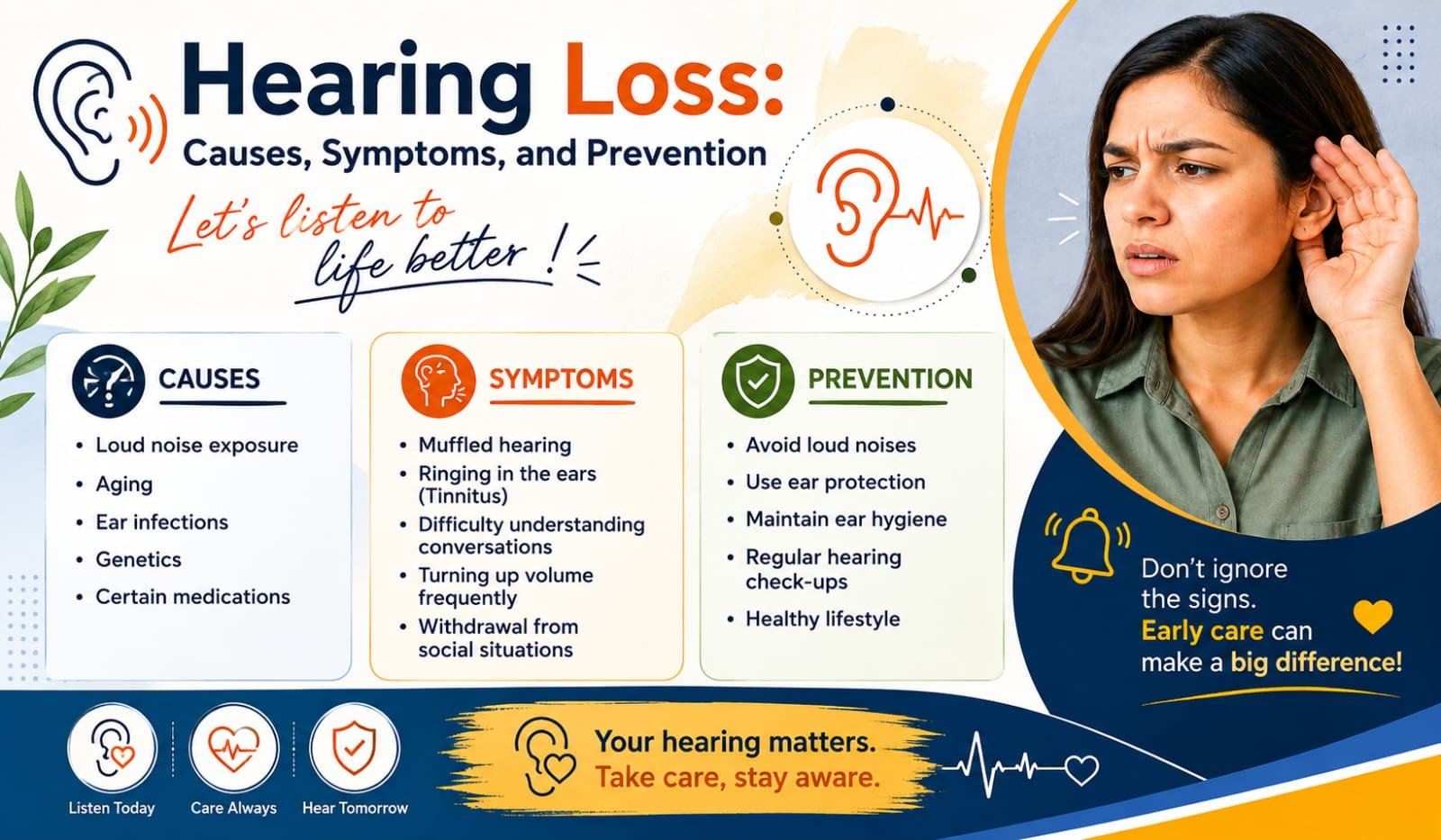
Hearing helps us communicate, stay aware of our surroundings, enjoy music and conversations, and remain connected with the people around us. When hearing gradually becomes weaker, even simple everyday interactions can become difficult. The good news is that understanding the early signs of hearing loss and taking timely action can help prevent avoidable hearing damage and make existing hearing difficulties easier to manage.
Hearing loss can affect people of different ages and can happen for many reasons, including ageing, prolonged exposure to loud sounds, ear infections, certain medicines, injuries, and other health conditions. While some types of hearing loss can be prevented, others may require professional evaluation and suitable ear machine support.
What Is Hearing Loss and Its Types?
Hearing loss is the reduced ability to hear sounds clearly in one or both ears. It may develop gradually or suddenly due to ageing, loud noise, infections, or other ear problems. It can also vary from difficulty hearing soft sounds to trouble understanding speech in noisy places.
Conductive Hearing Loss
Occurs when sound cannot travel properly through the outer or middle ear, often due to earwax, infections, fluid, or eardrum problems. It may improve with proper treatment.
Sensorineural Hearing Loss
Caused by changes or damage in the inner ear or hearing nerve, commonly due to ageing or long-term noise exposure. It is often permanent but can be managed with suitable ear machine hearing support.
Mixed Hearing Loss
A combination of conductive and sensorineural hearing loss. A hearing assessment can help identify the cause and determine the appropriate support.
What Causes Hearing Loss?
Hearing loss can develop due to age, noise exposure, ear problems, certain medicines, injuries, or health conditions. Identifying the possible cause can help with timely evaluation and appropriate hearing care.
- Ageing: Natural changes in the ear over time can gradually reduce hearing, especially when understanding conversations in noisy places.
- Loud Noise: Regular exposure to loud music, machinery, traffic, or high-volume headphones can damage hearing over time. Both volume and exposure time matter.
- Earwax Buildup: Excess earwax can block the ear canal and make sounds seem quieter or unclear.
- Ear Infections: Infections, fluid, or inflammation in the ear can cause temporary hearing difficulties.
- Certain Medicines: Some medicines may affect hearing in certain situations. Any noticeable change should be discussed with a doctor.
- Head or Ear Injuries: Injuries can damage parts of the ear and may lead to hearing changes.
- Family History: Some types of hearing loss can run in families, making regular hearing checks useful.
- Other Health Conditions: Certain health conditions can also affect hearing, so unexplained changes should not be ignored.
What Are the Early Symptoms of Hearing Loss?
Hearing loss can be difficult to recognize, particularly when it develops gradually. Instead of feeling that they cannot hear, many people simply think that others are speaking too softly or unclearly.
Some common signs include:
- Frequently asking people to repeat themselves
- Increasing the volume of the television or mobile phone
- Finding conversations difficult in restaurants or crowded places
- Struggling to hear someone who is speaking from another room
- Feeling that people are mumbling
- Missing phone calls, alarms, or doorbells
- Depending heavily on lip movements or facial expressions to understand speech
- Having difficulty following group conversations
- Avoiding social situations because conversations have become tiring
- Hearing ringing, buzzing, or other sounds in the ears
- Feeling that one ear hears better than the other
If several of these signs sound familiar, a hearing test can help determine whether your hearing has changed.
How Is Hearing Loss Diagnosed?
A hearing professional may first ask about your hearing concerns, lifestyle, medical history, exposure to loud sounds, and when you first noticed a change.
A hearing test can then assess how well you hear different sounds and speech. The results help provide a clearer picture of your hearing ability.
This step is important because hearing solutions should not be selected simply because a particular device is popular or recommended by someone else. Ear machine needs can vary considerably from one person to another.
Can Hearing Loss Be Prevented?
Not all hearing loss can be prevented. For example, age-related changes or certain medical conditions may occur despite taking good care of your ears.
However, many cases of noise-related hearing damage can be reduced by adopting better hearing habits.
- Keep the Volume at a Comfortable Level
- Take Breaks From Headphones
- Protect Your Ears Around Loud Noise
- Avoid Putting Objects Into Your Ears
- Treat Ear Problems Promptly
- Consider Regular Hearing Checks
How Is Hearing Loss Treated and When Are Hearing Aids Recommended?
Treatment for hearing loss depends on its cause and severity. Problems such as earwax buildup or certain ear infections may improve after treating the underlying issue, while permanent hearing loss may require ongoing hearing support.
If hearing loss affects everyday communication, hearing aids may be recommended after a proper hearing assessment. These devices are designed to make sounds clearer and can be adjusted according to an individual’s hearing needs, lifestyle, and level of hearing loss. The term ear machine is also commonly used for hearing aids.
Choosing a hearing aid should be based on your hearing requirements rather than simply its price or features. A proper assessment and professional fitting can help ensure the device is suitable and comfortable.
Why Is Early Action Important?
Hearing loss can gradually affect conversations, work, and social interactions, so delaying a hearing check may allow the problem to become more disruptive. Getting your hearing tested does not mean you automatically need a hearing aid; it simply helps identify the problem and determine the most suitable next step.
What Should You Consider When Looking for Hearing Aids in Jaipur?
If you are searching for hearing aids in Jaipur, it is useful to look beyond the device itself.
Start with a proper hearing assessment. This helps establish what kind of hearing support you may need instead of choosing a device based only on appearance, price, or someone else’s recommendation.
You should also consider:
- Whether the device suits your level of hearing loss
- How comfortable it feels during extended use
- Whether it is suitable for your daily lifestyle
- How easily you can operate and maintain it
- Whether you need features such as wireless or smartphone connectivity
- Whether professional fitting and follow-up support are available
- Whether you understand how to use and care for the device
The right hearing solution should fit into your daily life rather than make everyday communication more complicated.
Protect Your Hearing and Take the Right Next Step!
Recognising hearing changes early can help prevent them from affecting everyday communication. If you notice difficulty hearing conversations, frequently ask others to repeat themselves, or regularly increase the volume of your devices, consider getting a hearing aid.
A hearing test can help identify the extent and possible cause of hearing loss and determine whether you need treatment, hearing support, or a hearing aid. Earbuddy focuses on helping people understand their hearing needs and explore suitable hearing solutions based on professional assessment.
Frequently Asked Questions
-
Can hearing loss affect one ear only?
Ans. Yes. Hearing loss can affect one ear or both ears, depending on its cause.
-
Is hearing loss common with age?
Ans. Yes. Hearing may gradually change with age, particularly the ability to hear certain sounds and understand speech in noisy environments.
-
Can hearing loss affect daily communication?
Ans. Yes. It can make conversations, phone calls, group discussions, and communication in noisy places more difficult.
-
Can hearing loss happen suddenly?
Ans. Yes. Hearing loss can sometimes occur suddenly and should be evaluated promptly by a healthcare professional.