
Hearing difficulty can affect everyday communication in ways that are easy to overlook. Following a conversation in a busy room, understanding television dialogue, hearing someone from another room, or participating comfortably in social situations can become challenging.
A hearing aid can help make important sounds more accessible, but choosing one is not simply about finding the smallest or most powerful device. Hearing aids are available in different styles and technology levels, and their suitability depends on factors such as hearing loss, lifestyle, comfort, handling ability, and listening environment.
If you are researching an Ear machine for yourself or a family member, understanding how hearing aids work and how their designs differ is a useful place to begin. With hearing-care solutions available through Earbuddy, knowing what to look for can also make it easier to discuss your requirements with a professional.
How Does Hearing Aid Work?
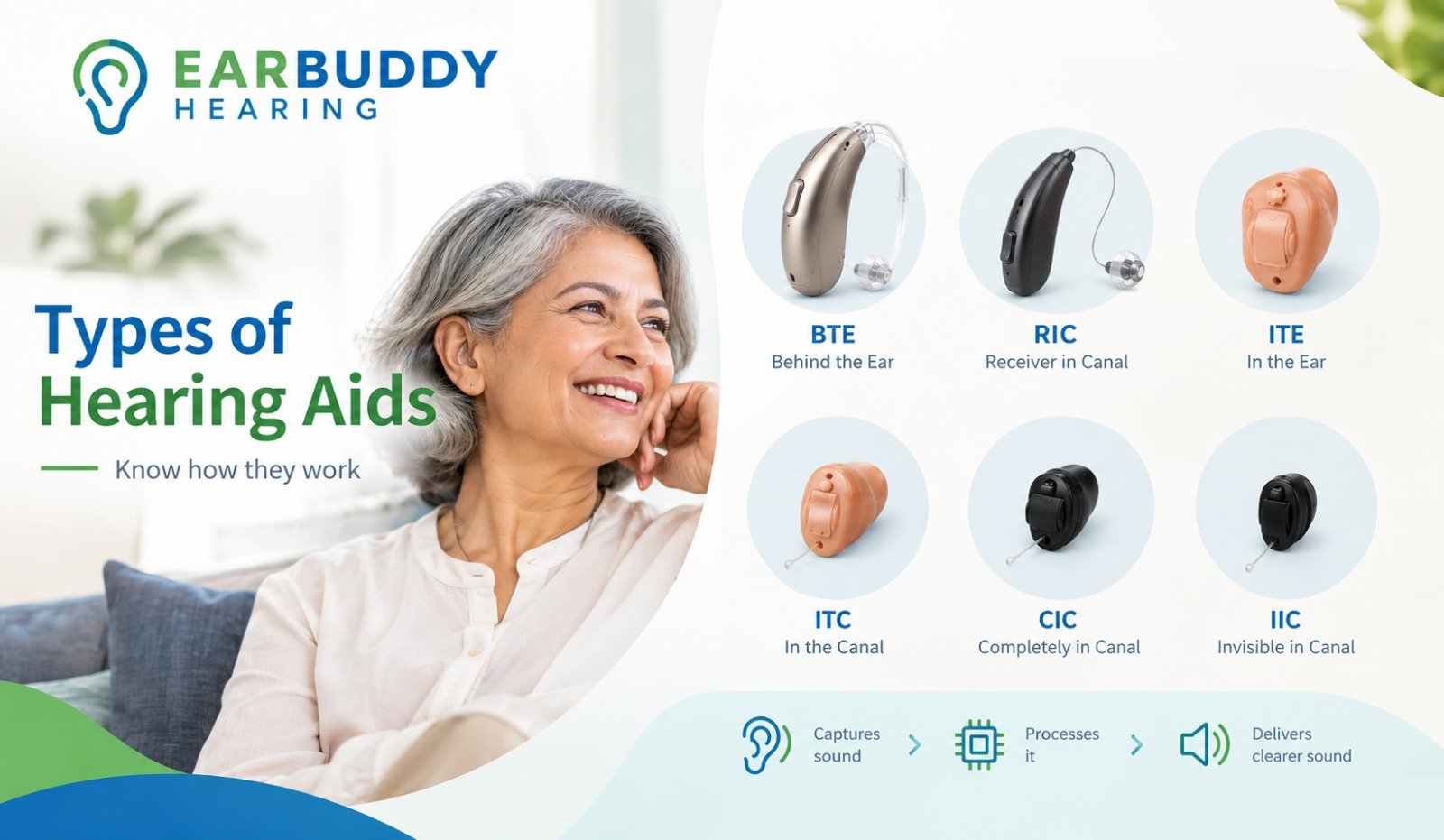
A hearing aid is a small electronic device that helps people with hearing loss hear sounds more clearly. Its basic operation relies on three main components: a microphone, processor, and speaker or receiver.
1. Sound Is Captured
The microphone picks up sounds such as speech, television, music, traffic, and other everyday sounds.
2. Sound Is Processed
The processor analyses the captured sound and adjusts it according to the user’s programmed hearing requirements. Modern digital hearing aids can process different frequencies separately and may include technologies for managing background noise or feedback.
3. Sound Is Delivered
The processed signal is converted back into sound and delivered to the ear through the speaker or receiver. The exact delivery method depends on the hearing-aid design.
The goal is not simply to make sounds louder, but to make important sounds more accessible at a comfortable listening level.
Different Types of Hearing Aids
The main difference between hearing-aid styles is where the device sits and how its components are arranged. The most common types include BTE, RIC, ITE, ITC, and CIC hearing aids.
1. Behind-the-Ear (BTE) Hearing Aids
Behind-the-Ear (BTE) hearing aids have their main housing positioned behind the ear. They connect to the ear through tubing, an earmould, or an appropriate ear tip.
Their larger housing provides space for electronic components and controls, making this style suitable for a broad range of hearing requirements.
How BTE hearing aids work
The microphone and processing components are housed behind the ear. After capturing and processing the sound, the device sends the adjusted signal into the ear through its connection system.
What makes BTE different?
BTE hearing aids can be easier for some users to handle because of their larger size. They are also available in configurations designed for different levels of hearing loss.
2. Receiver-in-Canal (RIC) Hearing Aids
Receiver-in-Canal (RIC) hearing aids have a small housing behind the ear, while the receiver sits in or close to the ear canal. A thin wire connects the receiver to the main housing.
This arrangement creates a relatively discreet design while keeping the main electronic components behind the ear.
How RIC hearing aids work
The microphone captures surrounding sounds and the processor adjusts them according to the programmed settings. The receiver then delivers the processed sound directly into the ear canal.
What makes RIC different?
RIC models can offer a compact design along with features available in modern digital hearing aids. Their small size can be appealing to people who prefer a less noticeable device.
3. In-the-Ear (ITE) Hearing Aids
In-the-Ear (ITE) hearing aids are designed to fit within the outer portion of the ear. Unlike BTE and RIC models, their main components are contained within the device positioned in the ear.
How ITE hearing aids work
The microphone captures sound, the internal processor adjusts the signal, and the speaker delivers the processed sound into the ear.
What makes ITE different?
The larger in-ear design can make the device easier for some users to handle compared with very small canal-based models. It can also provide space for controls and other components.
4. In-the-Canal (ITC) Hearing Aids
In-the-Canal (ITC) hearing aids sit partly inside the ear canal. Their placement gives them a more discreet appearance than many larger hearing-aid styles.
How ITC hearing aids work
The microphone picks up sound, the internal processor adjusts it, and the receiver delivers the processed signal through the ear canal.
What makes ITC different?
ITC hearing aids provide a balance between a smaller appearance and practical handling. However, their compact size means there may be less space for controls and other components.
5. Completely-in-Canal (CIC) Hearing Aids
Completely-in-Canal (CIC) hearing aids sit deeper inside the ear canal and are designed to be less noticeable during use.
How CIC hearing aids work
The microphone captures sound through the device’s opening. The internal electronics process the signal before the receiver delivers the adjusted sound into the ear canal.
What makes CIC different?
Their compact construction makes CIC hearing aids an option for people who prefer a discreet design. However, their small size can make them more difficult for some users to handle, particularly when inserting, removing, or maintaining the device.
Hearing Aid Types at a Glance
| Type | Placement | Key characteristic |
| BTE | Behind the ear | Versatile design with space for larger components |
| RIC | Behind the ear with receiver in/near the canal | Compact design with a separate receiver |
| ITE | Outer portion of the ear | Main components housed within the ear |
| ITC | Partly inside the ear canal | Discreet design with practical handling |
| CIC | Deeper inside the ear canal | Compact and less noticeable |
The physical appearance of a hearing aid is only one consideration. Hearing loss, ear anatomy, listening environment, comfort, handling ability, and required features should also be taken into account.
Features Available in Modern Hearing Aids
Today’s hearing aids can include features designed to support different listening situations. Depending on the model, these may include:
- Digital sound processing to adjust sound according to programmed settings.
- Noise-management technology to help manage certain unwanted background sounds.
- Directional microphones that can give greater emphasis to sounds from particular directions.
- Feedback management designed to reduce unwanted whistling.
- Bluetooth connectivity on compatible models for connection with smartphones and other devices.
- Rechargeable power in models designed with built-in rechargeable batteries.
- Smartphone apps or remote controls that may allow users to adjust selected settings.
The most useful features depend on the individual’s routine. A person who spends most of their time at home may have different priorities from someone who regularly attends meetings, travels, or spends time in busy social environments.
How to Choose the Right Hearing Aid?
Choosing the right hearing aid depends on your hearing needs, daily routine, comfort, and the environments where you need better hearing. If you are looking for hearing aids in Jaipur, consider the complete hearing-care experience rather than comparing devices only by appearance or price.
Start with a Hearing Assessment
A professional hearing assessment helps determine the type and degree of hearing loss, providing a basis for selecting a suitable hearing-aid style and level of amplification. Professional fitting and programming can then help align the device with your hearing profile.
Consider Your Daily Listening Needs
Think about where hearing is most challenging, whether at home, in restaurants, workplaces, outdoor settings, or group conversations. Different listening environments may create different demands, so the hearing aid should suit your everyday requirements.
Prioritise Comfort and Ease of Use
A hearing aid needs to be comfortable enough for regular use. Consider whether you can easily insert, remove, clean, charge, or manage the batteries. Comfort and handling can also influence how consistently you use the device.
Choose Features That Match Your Needs
Features such as noise management, connectivity, and rechargeability can be useful, but they should support your actual listening requirements rather than simply add unnecessary complexity.
Look Beyond the Device
If you are considering an Ear machine, also look at the support available before and after purchase. This may include device selection, fitting, programming, maintenance guidance, adjustment options, warranty, servicing, battery or charging requirements, and follow-up assistance.
For those exploring hearing aids in Jaipur, Earbuddy can be considered as part of the search for hearing-care solutions and hearing-aid options. Focusing on the right combination of hearing needs, comfort, functionality, fitting, and ongoing support can make the process of choosing and using a hearing aid more practical.
Why Professional Guidance Matters
Hearing loss can differ significantly from one person to another, so a device that works well for one individual may not be suitable for someone else. A professional assessment can help determine the nature and extent of hearing difficulty and whether a hearing aid is appropriate.
Professional guidance is particularly important if hearing loss develops suddenly or is accompanied by symptoms such as significant ear pain, ear drainage, or dizziness. These situations may require medical evaluation rather than simply purchasing a hearing aid.
For everyday hearing concerns, working with a qualified hearing-care professional can help you select, fit, and adjust a device according to your requirements.
Frequently Asked Questions:
- What are the main types of hearing aids?
Ans. The main types include BTE, RIC, ITE, ITC, and CIC hearing aids. They differ mainly in where they sit on or inside the ear and how their components are arranged.
- How does a hearing aid work?
Ans. A hearing aid captures sound through a microphone, processes and adjusts it according to programmed settings, and delivers the processed sound through a speaker or receiver.
- How do I choose the right hearing aid?
Ans. The right hearing aid depends on factors such as the type and degree of hearing loss, comfort, daily listening environment, ease of handling, and required features. A professional hearing assessment can help identify a suitable option.
- Where can I find hearing aids in Jaipur?
Ans. People looking for hearing aids in Jaipur can explore different hearing-aid styles and hearing-care options through providers such as Earbuddy. Professional assessment, fitting, programming, and after-sales support are also important considerations.
For More Details :- Whatsapp